Understanding how preschool develops social skills can help parents see the value of early learning experiences before kindergarten begins. Preschool gives children regular opportunities to communicate, cooperate, share, listen, and build relationships with others in a supportive setting.
Through group activities, guided play, classroom routines, and everyday interactions, children learn to express their needs, manage emotions, and respond appropriately to peers. These early social experiences can build confidence and independence while helping children feel more comfortable in group settings. Developing these skills before kindergarten can support a smoother transition into more structured classroom settings and future learning.
Building Social Skills for Preschoolers Through Daily Interaction
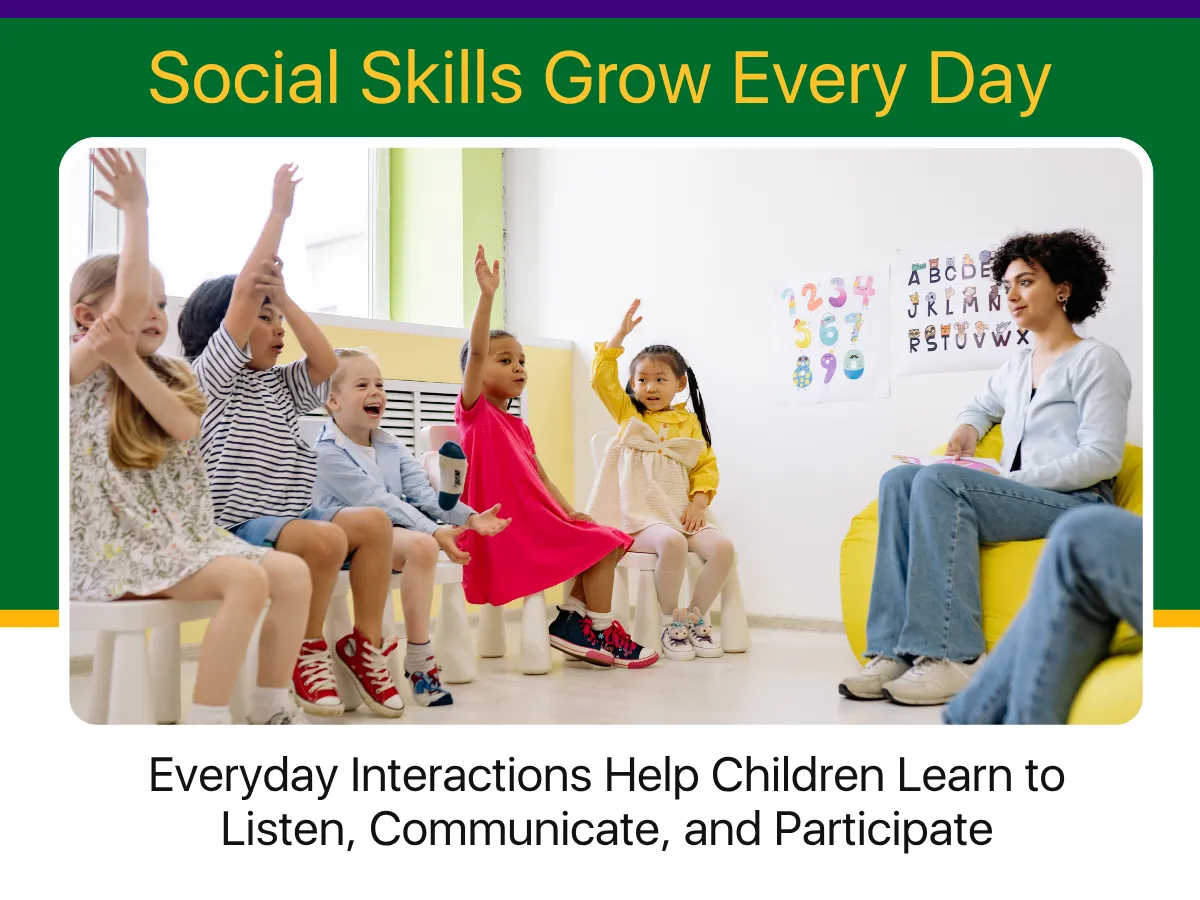
Preschoolers develop social skills through repeated, meaningful interactions with teachers and peers throughout the day. These experiences help children learn how to communicate clearly, listen to others, participate in a group, and respond appropriately in different social situations. Rather than developing these abilities through isolated lessons, children often build them naturally during play, classroom routines, meals, transitions, and shared activities.
Learning to Communicate Needs and Ideas
Preschool gives children regular opportunities to express what they want, need, or feel. They may ask for a turn with a toy, explain an idea during group time, or tell a teacher when they need help. These moments support early communication skills while also teaching children that their words can solve problems and help them connect with others.
Teachers can reinforce this development by modeling respectful language and helping children find appropriate ways to express themselves.
Practicing Listening and Turn Taking
Being part of a classroom community also teaches children that communication involves listening, not just speaking. Everyday activities can help children practice:
- Waiting for another child to finish speaking
- Taking turns during games and activities
- Following simple group instructions
- Responding to questions from teachers and peers
- Respecting another child’s space and materials
These small interactions help children understand the give-and-take involved in positive social relationships.
Developing Confidence in Group Settings
Regular participation in group experiences can help children become more comfortable around others. Singing together, completing a shared activity, joining imaginative play, or contributing during circle time can gradually strengthen confidence.
As children become more familiar with classroom routines and expectations, they may feel increasingly secure participating in new situations. This growing confidence can make it easier to approach peers, communicate with adults, and take part in group learning. Over time, these daily experiences help create a strong foundation for the social demands children will encounter in kindergarten.
How Cooperative Play in Preschool Supports Social Development
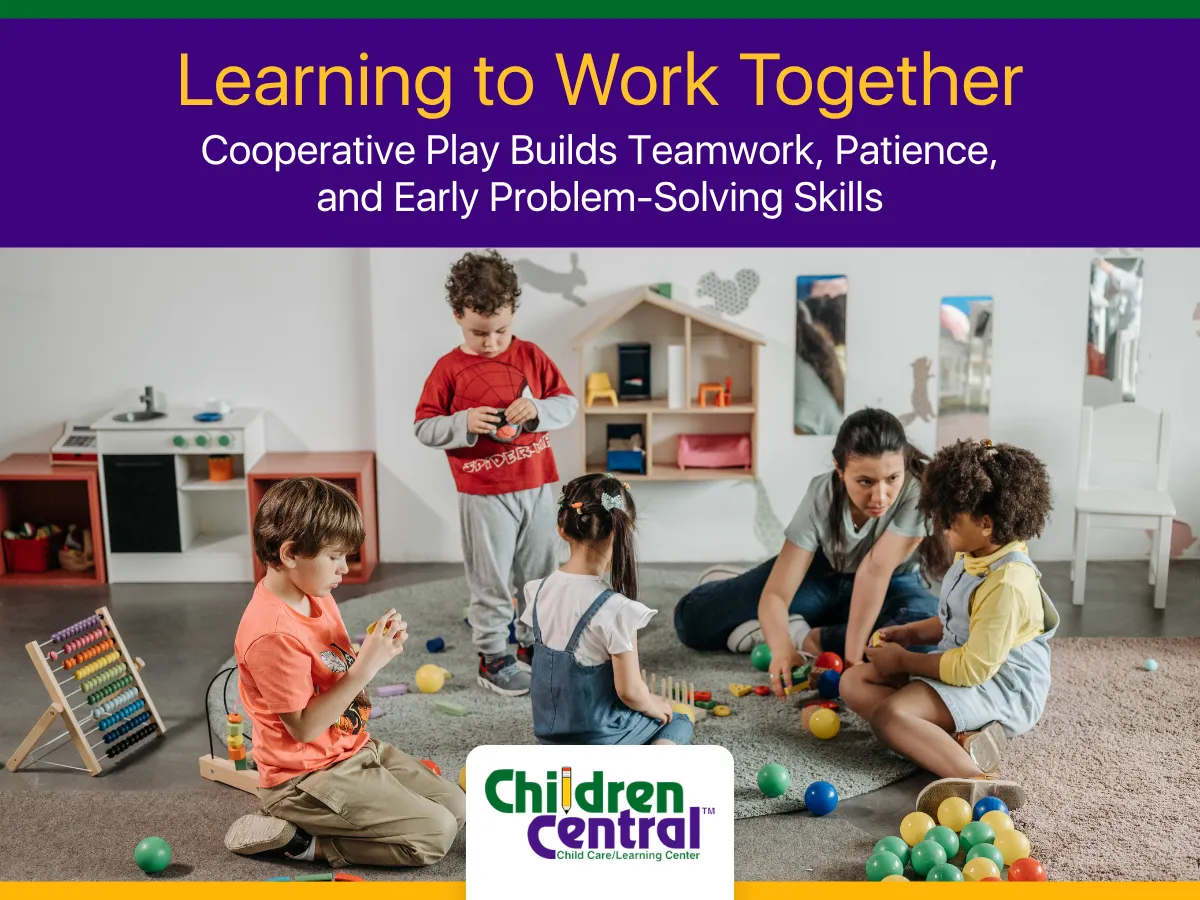
Cooperative play in preschool gives children meaningful opportunities to work with others toward a shared goal. Whether they are building a block structure, creating a pretend restaurant, completing a group art project, or playing an outdoor game, children learn that successful play often depends on communication, patience, and flexibility.
Learning to Share Ideas and Responsibilities
During cooperative activities, children begin to understand that everyone can contribute something different. One child may suggest an idea while another gathers materials or takes on a specific role. These experiences help children practice:
- Sharing toys and classroom materials
- Listening to another child’s ideas
- Waiting for a turn
- Making simple group decisions
- Taking responsibility for part of an activity
These skills support a stronger understanding of teamwork and help children become more comfortable participating in group experiences.
Developing Problem-Solving Skills With Peers
Playing together does not always go smoothly, and that can be an important part of social development. Children may disagree about who gets a certain toy, how to play a game, or what role each person should have.
With appropriate teacher guidance, these moments can become valuable learning opportunities. Children can begin to practice using words to explain their feelings, consider another person’s perspective, and find a solution that lets play continue. Over time, these experiences can strengthen patience, flexibility, and early conflict-resolution skills.
Building a Sense of Belonging
Cooperative play also helps children experience what it means to be part of a group. Completing something together can create a sense of connection and shared accomplishment.
As children participate in repeated group activities, they become more familiar with their classmates and more confident joining social situations. These positive experiences can help children feel secure within the classroom community while preparing them for the teamwork, communication, and collaboration that become increasingly important in kindergarten.
Strengthening Preschool Friendship Skills
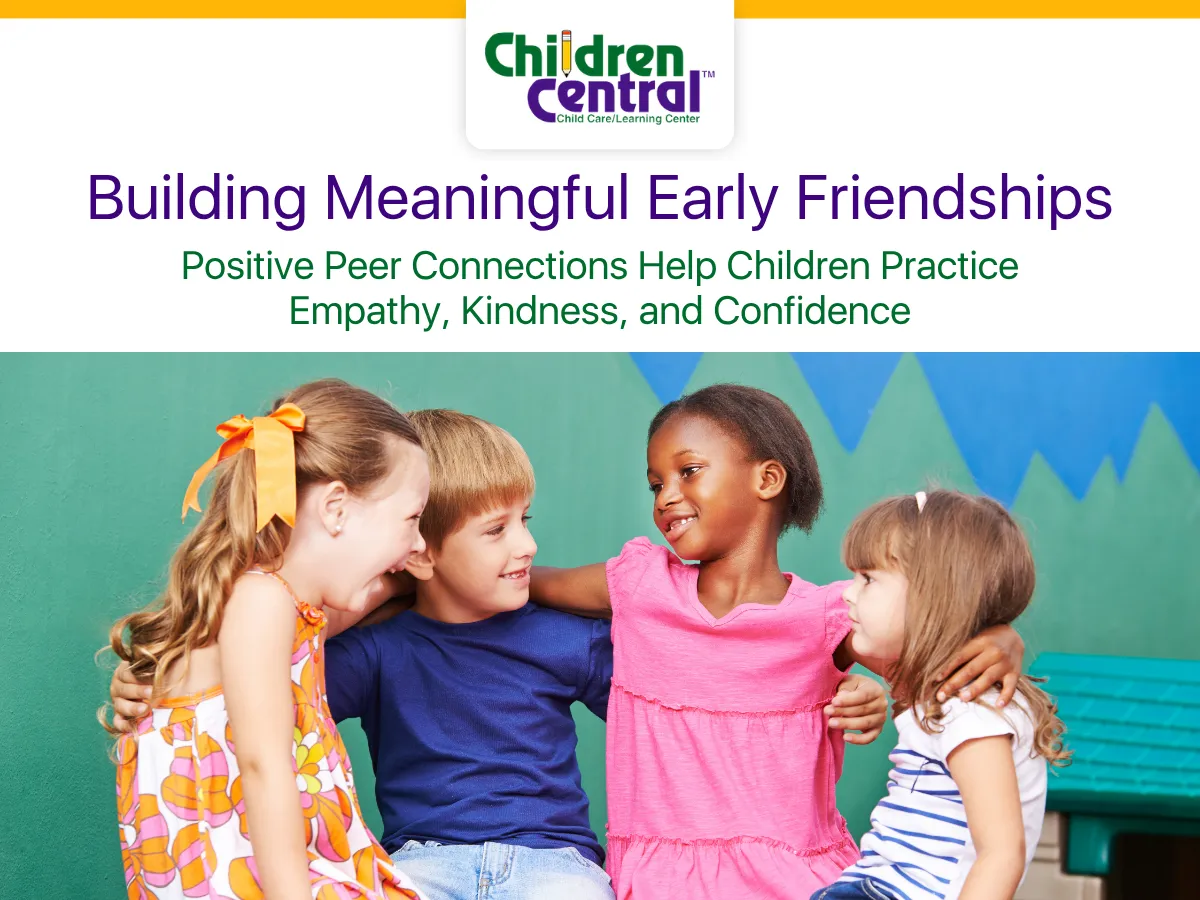
Preschool friendship skills grow as children learn to connect with others, respond to emotions, and build positive relationships. At this age, friendships may begin through simple moments such as choosing to play together, sharing a favorite activity, or sitting beside the same classmate during group time. These early connections give children valuable opportunities to practice empathy, communication, and cooperation.
Recognizing and Responding to Emotions
Friendships help children become more aware of how others feel. A child may notice when a classmate is upset, excited, frustrated, or left out and begin learning how to respond appropriately.
Teachers can support this growth by helping children identify emotions and encouraging simple, caring responses such as:
- Asking if a friend is okay
- Offering help when someone is struggling
- Inviting another child to join an activity
- Using kind words during disagreements
- Celebrating another child’s success
These experiences help children understand that friendships involve both expressing their own feelings and considering others’ feelings.
Learning How to Maintain Positive Relationships
Building a friendship also requires practice. Children gradually learn that positive relationships involve sharing attention, respecting boundaries, taking turns, and finding ways to reconnect after small disagreements.
Classroom activities provide repeated opportunities to strengthen these skills in a supportive setting. Children may work together on a puzzle, take part in pretend play, or collaborate during a creative project. Each interaction gives them another chance to practice patience and communication.
Building Confidence Through Connection
Positive friendships can also support a child’s sense of security and belonging. When children feel accepted by their peers, they may become more willing to participate in group activities, try unfamiliar experiences, and express themselves.
These early friendship skills can make the transition to kindergarten feel more manageable by helping children enter a new classroom with experience forming relationships, communicating with peers, and participating as part of a group.
How Classroom Routines Encourage Social Responsibility
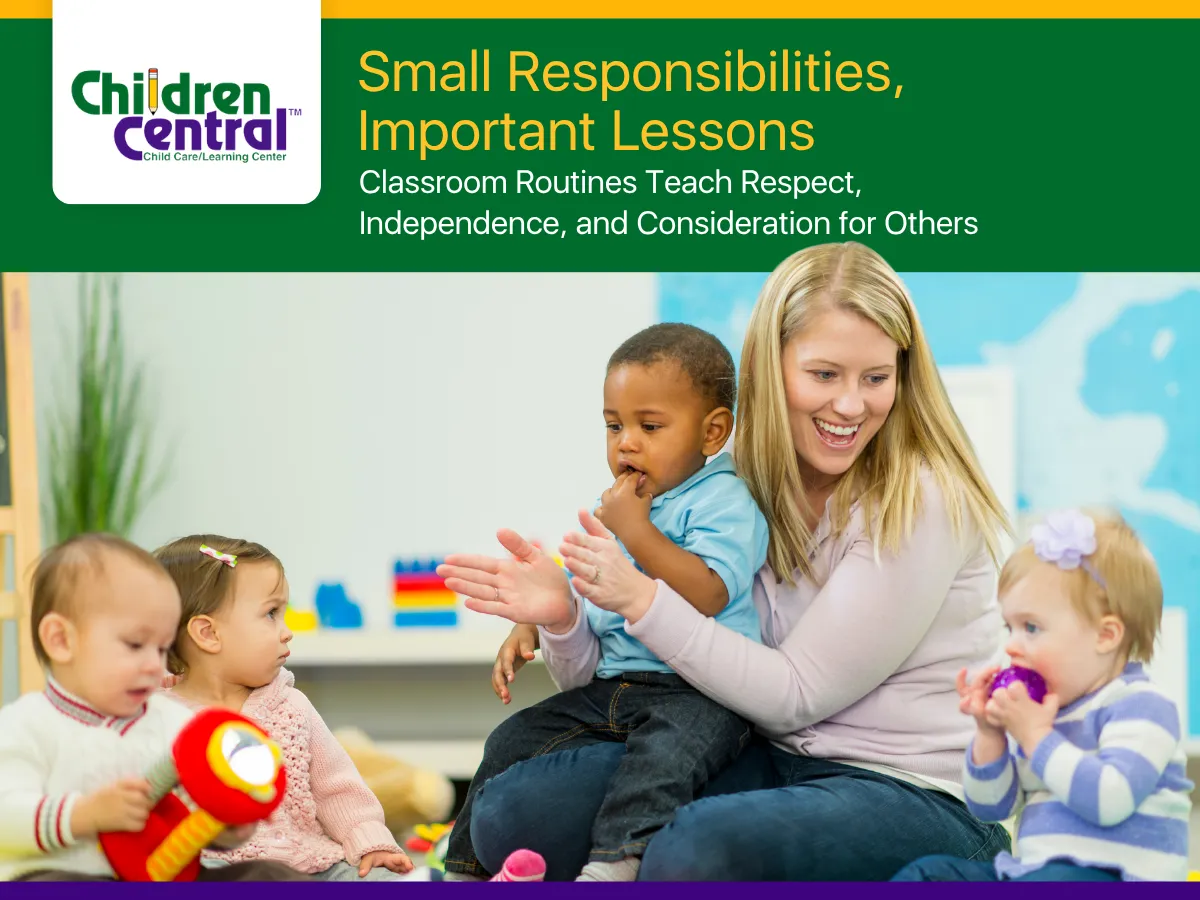
Classroom routines help children understand that they are part of a community where everyone has a role to play. Simple daily expectations can teach preschoolers how their actions affect others while encouraging responsibility, independence, and respect. Over time, these repeated experiences can make positive social behavior feel more natural.
Learning to Follow Shared Expectations
Preschool classrooms often include predictable routines for arrival, cleanup, meals, transitions, and group activities. These routines help children understand what is expected of them and why consistency matters.
For example, children may learn to:
- Put materials away after using them
- Wait patiently during transitions
- Help prepare a space for the next activity
- Follow simple classroom rules
- Respect shared materials and learning areas
These habits support self-control while also helping children see how cooperation keeps the classroom running smoothly.
Taking Responsibility for Everyday Tasks
Age-appropriate classroom responsibilities can give children a meaningful sense of contribution. A child may help pass out supplies, organize materials, water a classroom plant, or assist with cleanup.
These small tasks encourage children to take ownership of their environment and see that their efforts matter. They also build confidence by showing children they can complete responsibilities independently.
Understanding How Actions Affect Others
Social responsibility is also about learning to consider other people. Classroom routines create regular opportunities for children to notice how their behavior can support or disrupt the group.
A child who waits for a turn, returns a toy to its place, or listens during group time is practicing more than following rules. They are learning respect, patience, and consideration for others.
By experiencing these expectations each day, children gradually build the habits they will need in kindergarten, including following routines, participating in a classroom community, and taking responsibility for their choices.
Conclusion
Preschool gives children the time, structure, and support they need to strengthen the social skills that will continue to develop throughout their school years. Through daily interaction, cooperative play, friendships, classroom routines, and teacher guidance, children learn how to communicate, work with others, manage emotions, and participate positively in a group.
These experiences can help children approach kindergarten with greater confidence and a stronger understanding of how to build relationships and contribute to a classroom community. Social development happens gradually, and preschool provides many meaningful opportunities to practice these skills in a supportive environment.
Ready to learn more about preschool at Children Central? Call (267) 732-1335 or contact Children Central to get started.