


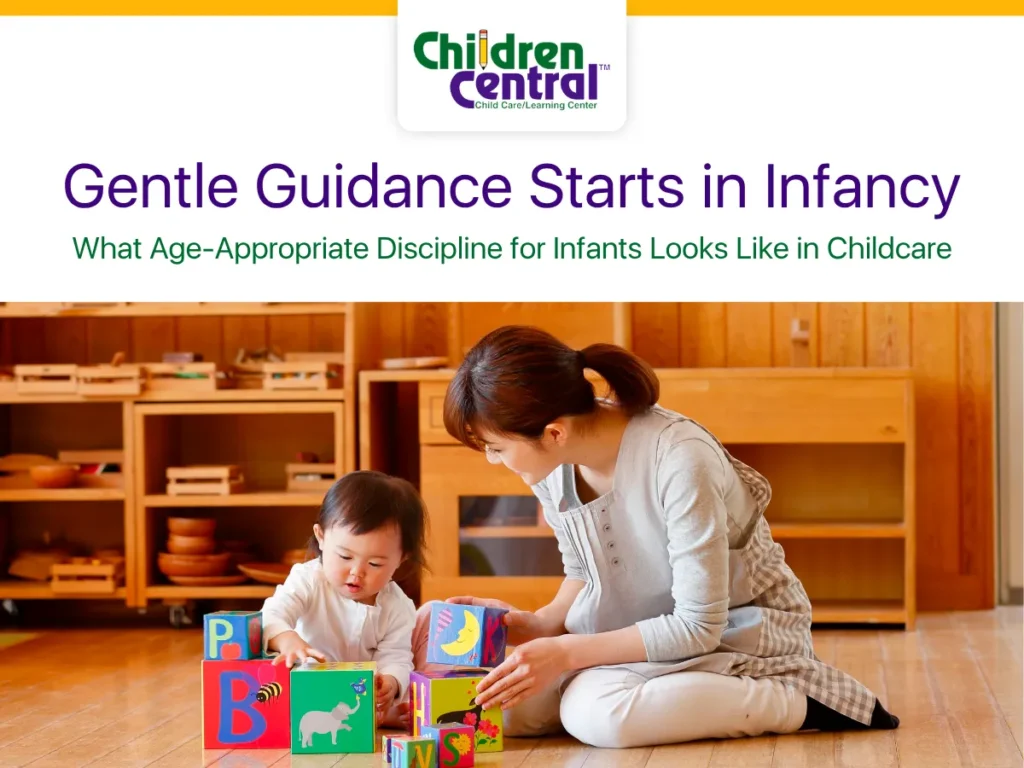
Age-appropriate discipline for infants focuses on guidance, consistency, and responsive care rather than punishment. During the first year of life, babies are still learning how to communicate their needs, regulate emotions, and understand the world around them. In a quality childcare setting, caregivers support this development by using calm redirection, predictable routines, gentle boundaries, and positive reinforcement.
These approaches help infants feel secure while gradually building early social and emotional skills. By responding with patience and understanding, caregivers create a nurturing environment where children can begin learning appropriate behavior that matches their developmental stage.
How Infant Emotional Development Shapes Early Behavior
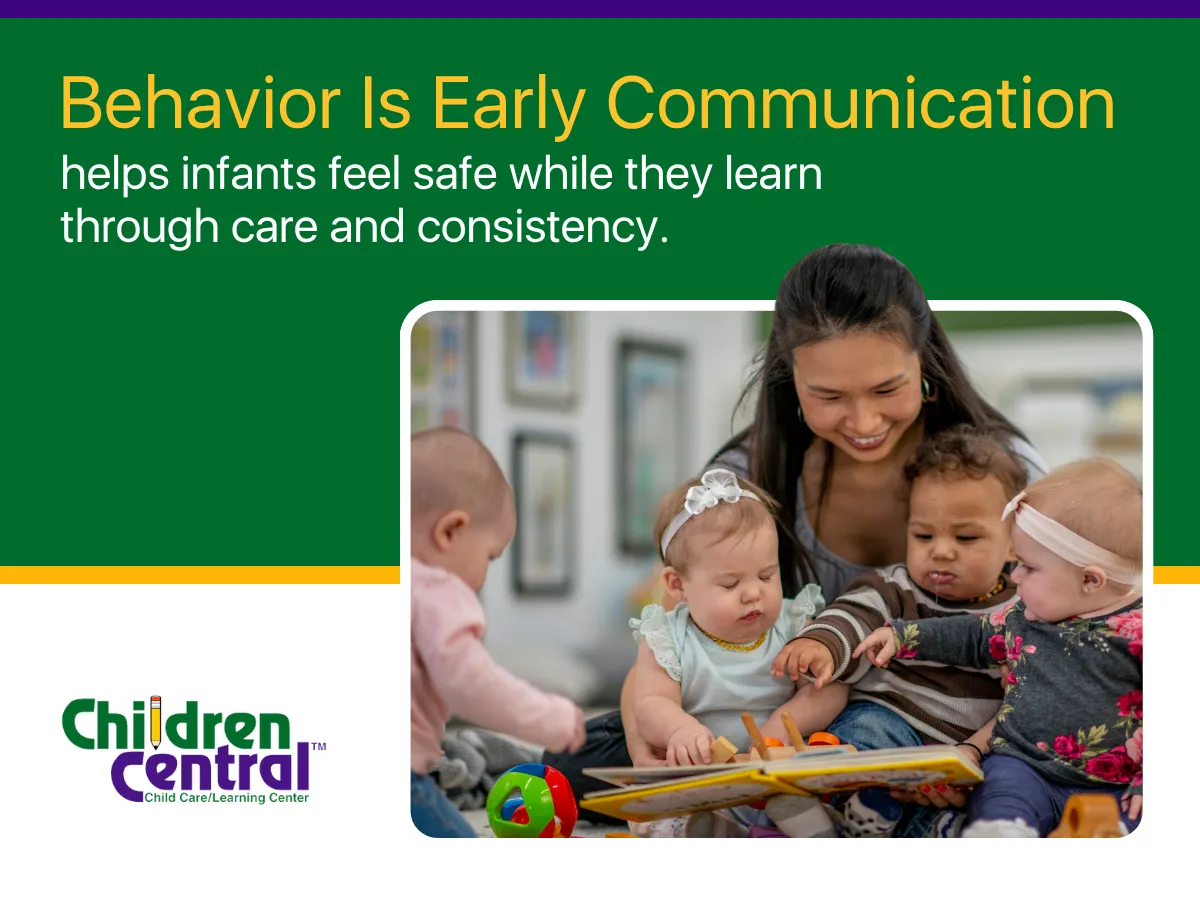

Infants do not behave with the intention of testing rules or challenging adults. Their actions are closely connected to their stage of emotional, physical, and cognitive development. Crying, reaching, grabbing, pushing, and resisting transitions are common ways infants communicate discomfort, curiosity, frustration, or the need for reassurance.
Behavior as Communication
Because infants have limited language skills, caregivers must look beyond the behavior itself and consider what the child may be communicating. A baby who cries during a transition may feel tired, overstimulated, hungry, or uncertain about a change in routine. An infant who grabs another child’s toy may be exploring movement and cause and effect rather than deliberately taking something away.
Caregivers can respond by:
- Observing patterns in the infant’s behavior
- Addressing physical and emotional needs
- Using calm words and facial expressions
- Redirecting the child toward a safe activity
- Allowing time for the infant to settle
The Role of Secure Relationships
Consistent, responsive care helps infants develop trust and emotional security. When caregivers respond calmly and predictably, infants begin to learn that adults will help them manage difficult feelings. This sense of safety supports early emotional regulation and can reduce distress over time.
Warm interactions, such as gentle reassurance, eye contact, and comforting physical support, also help infants build healthy relationships. These experiences create the foundation for later skills such as cooperation, empathy, and self-control.
Understanding Developmental Limits
Infants are not yet able to understand rules, consequences, or expectations in the same way older children can. They need repeated guidance and patient support as they explore their environment.
Age-appropriate responses focus on safety, redirection, and connection. Instead of expecting immediate compliance, caregivers provide clear boundaries while recognizing that emotional development takes time. This approach supports healthy behavior without placing unrealistic expectations on the child.
Positive Infant Guidance Strategies Used by Caregivers
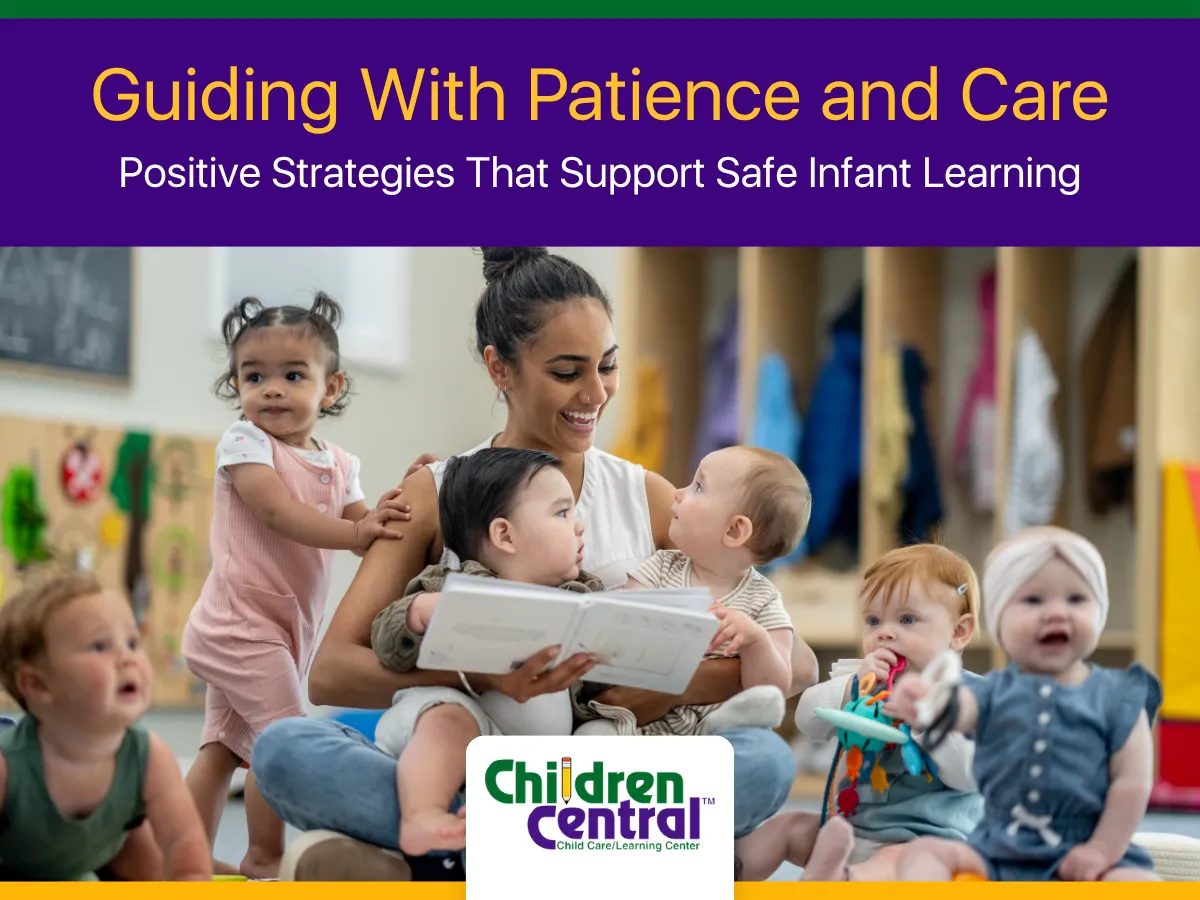
Positive infant guidance strategies help caregivers respond to behavior in ways that support safety, trust, and healthy development. Since infants are still learning to communicate and regulate emotions, guidance should be calm, consistent, and appropriate for their developmental abilities.
Using Gentle Redirection
Redirection helps move an infant away from an unsafe or unsuitable action without using fear or punishment. For example, if a baby reaches for another child’s face, the caregiver may gently guide the infant’s hand toward a soft toy while using simple language such as, “Gentle hands.”
Effective redirection may include:
- Offering a safe alternative
- Changing the infant’s position or environment
- Using a calm and reassuring voice
- Repeating the response consistently
- Recognizing when the child needs rest or comfort
Modeling Appropriate Interactions
Infants learn through observation and repeated experiences. Caregivers model positive behavior by using gentle movements, respectful language, and patient responses throughout the day. When an infant grabs, pushes, or pulls, the caregiver can demonstrate a safer way to interact.
Simple phrases, including “soft touches” or “hands stay safe,” help connect language with the caregiver’s actions. Infants may not understand every word, but the consistent tone, expression, and response support early learning.
Encouraging Positive Behavior
Caregivers reinforce appropriate behavior by offering attention and encouragement when infants interact safely, wait calmly, or respond to redirection. Positive reinforcement at this stage does not need to involve rewards. Warm expressions, smiles, praise, and comforting attention can help infants associate safe behavior with positive interactions.
Guidance should also consider each infant’s temperament, routine, and developmental needs. Some babies may need additional time to adjust to transitions, while others may become overwhelmed in busy environments. By observing each child carefully, caregivers can use individualized strategies that support emotional security while establishing gentle and consistent boundaries.
What Discipline Looks Like in an Infant Daycare Setting
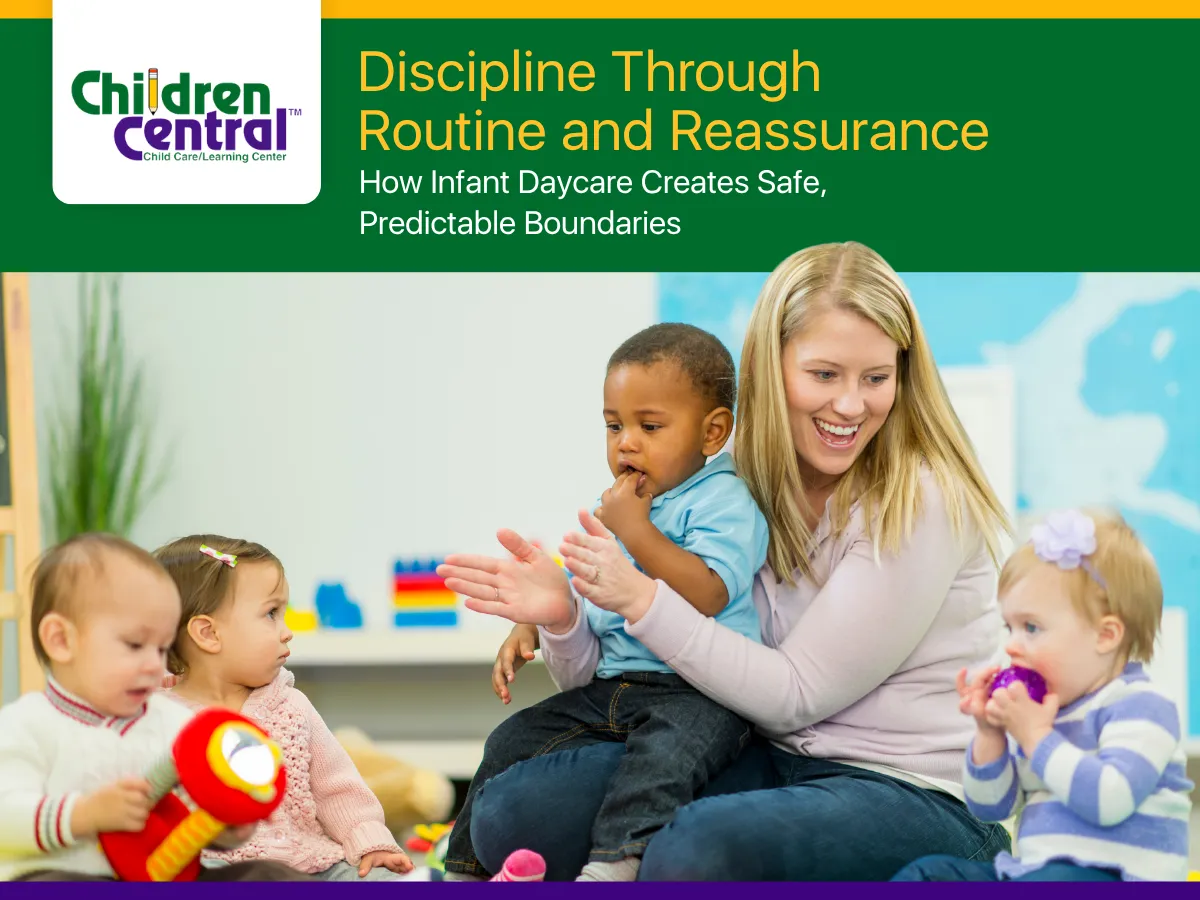
Discipline in an infant daycare setting is centered on responsive caregiving rather than correcting intentional misbehavior. Caregivers create a safe, predictable environment and guide infants through everyday experiences with patience, repetition, and developmentally appropriate expectations.
Establishing Predictable Routines
Consistent routines help infants understand what to expect throughout the day. Regular feeding, sleeping, diapering, and play schedules can reduce uncertainty and support emotional regulation. Although routines may be adjusted to meet individual needs, familiar patterns provide a sense of stability.
Caregivers may prepare infants for transitions by:
- Using the same gentle words before an activity
- Providing comfort during changes
- Allowing time to adjust
- Maintaining familiar caregiving practices
- Watching for signs of tiredness or overstimulation
Setting Safe and Simple Boundaries
Infants need physical guidance because they cannot yet remember or follow complex rules. Caregivers establish boundaries by arranging the classroom safely, staying close during exploration, and calmly preventing actions that could cause harm.
If an infant crawls toward an unsafe area, the caregiver may block access and guide the child toward an appropriate play space. If a baby pulls another child’s hair, the caregiver can gently release the child’s hand, comfort the other infant, and redirect the interaction.
Responding Consistently to Behavior
Consistency helps infants become familiar with appropriate responses. Caregivers should use similar language and actions each time a behavior occurs. This does not mean expecting immediate change. Infants need repeated support as their physical, emotional, and social abilities develop.
Quality infant daycare programs also communicate with families about emerging behaviors, routines, and successful guidance methods. Sharing observations allows caregivers and parents to understand possible triggers and respond in supportive ways. Through consistent care and respectful guidance, discipline becomes part of a nurturing environment that protects infants while supporting their earliest behavioral development.
Why Punishment Is Not Appropriate for Infants
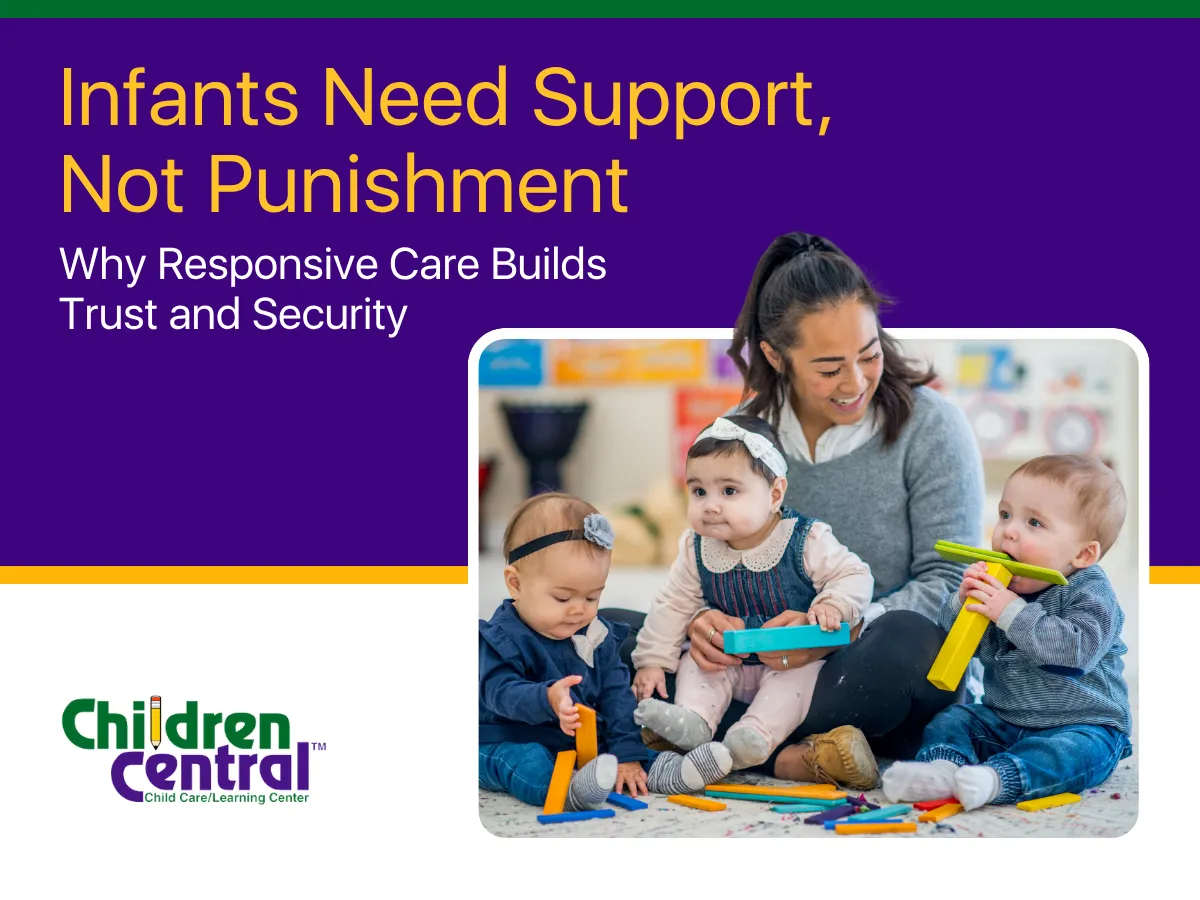
Punishment is not appropriate for infants because they do not yet have the cognitive or emotional ability to understand wrongdoing, consequences, or adult expectations. Behaviors that may appear challenging are usually expressions of a need, an emotional response, or part of normal exploration.
Infants Cannot Connect Punishment With Behavior
During infancy, the brain is developing rapidly, but the ability to understand cause and effect remains limited. A baby cannot connect a delayed consequence with an earlier action. Even an immediate punishment does not teach the infant what to do differently.
For example, an infant who throws food may be exploring texture, movement, or the reaction that follows. A calm response and redirection can support learning, while punishment may create confusion or distress.
Harsh Responses Can Affect Emotional Security
Infants depend on caregivers for comfort, protection, and emotional regulation. Yelling, shaming, isolation, physical punishment, or withholding comfort can weaken the child’s sense of safety. These responses may stop a behavior temporarily because the infant becomes frightened, but they do not teach healthy emotional or social skills.
Appropriate responses focus on:
- Protecting the infant from harm
- Remaining calm and emotionally available
- Meeting physical and emotional needs
- Redirecting unsafe actions
- Repeating simple boundaries patiently
Guidance Supports Long-Term Development
Healthy discipline during infancy begins with secure relationships. When caregivers respond predictably, infants learn that their needs will be recognized and that adults can help them through discomfort or frustration. Over time, these experiences support emotional regulation, trust, and positive interactions with others.
Caregivers can still set firm boundaries without using punishment. Removing an unsafe object, separating infants during a difficult interaction, or changing the environment can protect everyone involved. The goal is not to make an infant feel responsible or ashamed. It is to provide safety, connection, and repeated guidance while the child develops the skills needed to understand expectations later.
Conclusion
Age-appropriate discipline for infants is built on patience, observation, and responsive care. Babies need adults who understand that early behavior is a form of communication, not intentional defiance. Through consistent routines, gentle redirection, clear boundaries, and warm interactions, caregivers can protect children while supporting emotional security and healthy development.
A thoughtful approach to infant guidance helps children begin building trust, self-regulation, and positive relationships. It also creates a childcare environment where each infant feels safe, understood, and supported as they grow.
To learn more about infant care at Children Central, call (267) 732-1335 or visit https://childrencentral.net/contact-children-central/